
Categories
LeadershipPublished June 13, 2025
How Great Leaders Define Their Goals (and Avoid Wasted Energy)

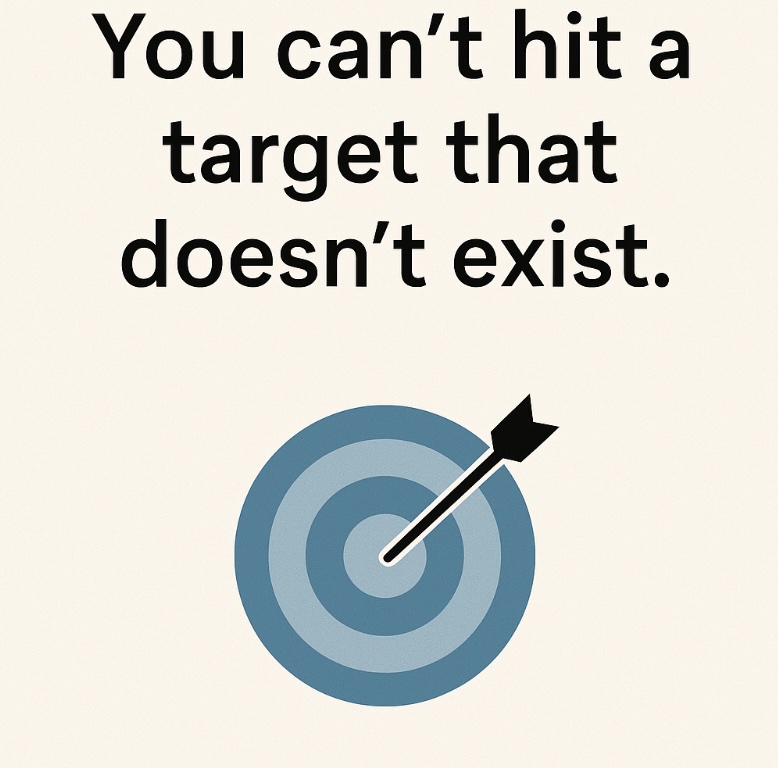
Most people don’t fail because they lack motivation or talent.
They fail because their goals were never truly defined.
In fast-paced organizations, it’s easy to rush into action — meetings, tasks, momentum — without a clear target. That’s when frustration builds. Momentum without direction leads to wasted energy, missed opportunities, and disengaged teams.
You wouldn’t jump in a car and start driving without knowing the destination. Yet that’s exactly how many driven professionals operate — without a clearly defined outcome.
What Sets High-Achieving Leaders Apart
Leaders who hit their goals consistently don’t just work harder — they define success more clearly. They build structure around the outcome. They make the finish line visible to their team.
In Achieve Your Apex, one of the foundational tools shared is the T.I.M.E. Framework, a simple structure for evaluating whether a goal is truly ready to be pursued.
What the T.I.M.E. Framework Delivers
A goal worth chasing needs to meet four criteria:
-
Timeline – A goal without a deadline is just a wish. A timeline applies positive pressure and creates a plan.
-
Importance (To You) – If the goal doesn’t matter personally, motivation will fade. Relevance drives action.
-
Measurable – Without clear metrics, there’s no way to track progress or celebrate milestones.
-
Effort – Real goals require real energy. The daily actions must match the desired outcome.
From personal growth to corporate targets, this framework works because it brings clarity. Teams aligned around a clearly defined goal gain traction quickly and adjust with purpose.
What’s at Risk Without Goal Clarity?
When a company culture rewards busyness over direction, the cost is high:
-
Teams feel frustrated without seeing results
-
Leaders operate in reaction mode
-
Talent gets misdirected or burned out
A goal that lacks clarity becomes a moving target. And when the target moves, accountability disappears.
Who Benefits Most from This Shift?
-
CEOs who want to re-energize a leadership retreat
-
Sales leaders aiming to refocus quarterly priorities
-
Top performers who’ve plateaued and need structure to scale
-
Culture-focused organizations ready to rally teams around meaningful metrics
This framework doesn’t just inspire action — it activates execution. The best part? It sticks long after the meeting ends.
The T.I.M.E. framework is just one of the tools covered in Achieve Your Apex — a book designed to help leaders move with purpose, not just speed. If your team’s energy needs clearer direction, this is a great place to start.
→ Get your copy of Achieve Your Apex or explore the podcast
Chad Hyams
Voice of Reason | Ember Seminars
or another way